I was recently invited to talk about gardening on Talk of Alaska. Before the show, I was asked how I got into the work I do. It got me thinking about how I got into the work I do.
My first job was working on a farm at age 13 in 1995. My neighbor got a greenhouse and farm at auction after a marijuana bust. One greenhouse was full of gorgeous roses of all colors. I worked from 7 to 11 a.m. It was tough to get up that early when I was accustomed to sleeping in until 10 a.m. in the summers. But it was satisfying to be productive and get some exercise in before the time I would normally wake up.
The bike ride was short, but I lived at the top of Coyote Trail, so biking home included a hill with 600 feet of elevation gain in one mile. I gathered big and small eggs from guinea hens, chickens, ducks and geese. There were peacocks, but they were just for looks. I pollinated tomatoes, wrapped English cucumbers and stuck the Alaska Grown logo on them. I sidebudded, cut and stripped roses. I sold eggs, tomatoes, cucumbers, and roses at the Tanana Valley Farmers Market — the oldest and longest continually running farmers market in Alaska.
I didn’t understand why I didn’t sell out every week at the market, but at the time, interest in local foods was not mainstream. My least favorite part of that job was feeding the turkeys and butchering them. They were mean. I remember my hands freezing, digging up potatoes in the fall. Looking for eggs in the morning was like going on an Easter egg hunt every day. I liked working in a greenhouse full of roses.
My next job, while in high school, was at a greenhouse and farm across the street — Ann’s Greenhouses. I started as a transplanter, uppotting seedlings of all types into six packs. I was paid by the flat, so I learned to work quickly. I was kept on for the summer doing all manner of jobs.
One day, Ann asked me why the plants were wilting, and then, I was in charge of watering several large greenhouses. I planted, transplanted, moved plants from here to there, watered, pollinated, weeded, harvested and ran between all those tasks lest I be scolded. Again, I sold produce and plants at the Tanana Valley Farmers Market, often harvesting in the early morning before the market opened, then driving myself in a rickety old van or truck to market and setting up.
My least favorite job was spreading blood meal on rows of brassicas to supposedly deter the moose from eating them in the unfenced field. It would blow away as I spread it with my hand and into my face. The moose still came. Every day, Ann put out an impressive smorgasbord for lunch, from scratch, often with fresh produce from the farm. I don’t know how she managed that in addition to running a greenhouse. Among many other things, including noticing wilting plants, I learned to see what needed to be done and do it quickly.
In college, I worked for Gretchen Kerndt, owner of Basically Basil, a brilliant grower. I set up plastic mulch and low tunnels for the basil and opened and closed them depending on whether it was hot or cold or to harvest basil. I grew and harvested green basil, lemon basil, Thai basil, cinnamon basil, ruffled basil and purple basil as well as mint, thyme, marjoram, oregano, baby salad greens, edible flowers, and more.
I dried and bottled herb-infused vinegars that Gretchen sold as value-added products all year long. I was the speediest weeder on the farm.
I also worked at Calypso Farm and Ecology Center for a summer in college. I biked there and back, over 30 miles, uphill both ways. The hill there, up the Old Nenana highway, is over 1,000 feet elevation gain and the one back being Coyote Trail. There and back was more than 30 miles.
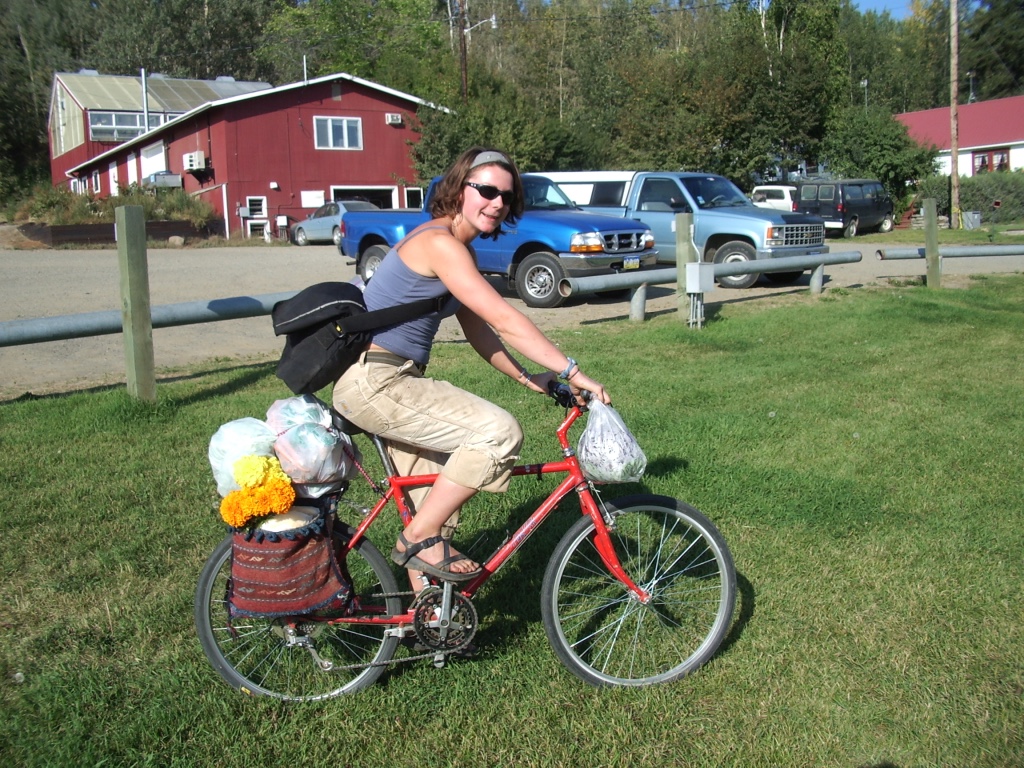
I taught kids about farming and ecology. There, I learned to farm organically and without running water. I turned a lot of compost piles and moved a lot of water up and down the hill. I pumped water out of a snow and rain catchment pond. The irrigation was primarily gravity-fed. I took their goats running in the forest with mixed success. I learned the ins and outs of what a Community Shared Agriculture Program was. I learned how to make sourdough pizza in a wood-fired oven.
I studied biology in college at the University of Colorado at Boulder. In one class, we got to grow plants in a greenhouse. I grew tatsoi, something I could at least eat. In my third year, I studied abroad in Costa Rica. For a required independent research project, I noted and analyzed the distribution of epiphytes, such as orchids on a host tree. I lived at a research station and also with a host family who had dairy cows. Although I found the various orchids intriguing, I was more interested in how the dairy farm functioned, milking the cows, eating bananas con leche with fresh bananas grown in the backyard, and squeezing juice from sugar cane with a trapiche (old-fashioned mill) and drinking the agua dulce.
When I graduated from college, I decided I was never going back to school and was going to be a farmer. That summer, I worked at a coffee shop and volunteered at the UAF Georgeson Botanical Garden. In the fall, my friend, Jed Brown, told me they needed people on the ski team. In order to be on the ski team, I needed to be a student. So in the span of about a week, I changed my tune about never going back to school and enrolled in a master’s program in the School of Natural Resources Management (now part of the College of Natural Science and Mathematics) at the University of Alaska Fairbanks.
Patricia Holloway, the director of the Georgeson Botanical Garden, put in a good word for me. For the first year, I ran and skied for UAF, did pottery, and half-heartedly attended classes. About a year in, I was told I needed to do a research project if I wanted to stay in graduate school.
Milan Shipka steered me in the direction of Meriam Karlsson, who researched growing crops in controlled environments, including growth chambers, greenhouses and high tunnels. She was also evaluating the efficacy of growing crops in a geothermally heated greenhouse at Chena Hot Springs Resort. I ended up working with her as my advisor, and growing crops inside and outside a high tunnel, which was a relatively new growing technique at the time.
First, we needed a high tunnel, so I helped build the high tunnel, teetering on the top of a ladder and drilling metal screws into a metal frame. Minutes after I planted my first test crops in the newly erected high tunnel, a dust devil came through the field and lifted the entire tunnel off the ground, mangled it and threw it into the trees. We built another one.
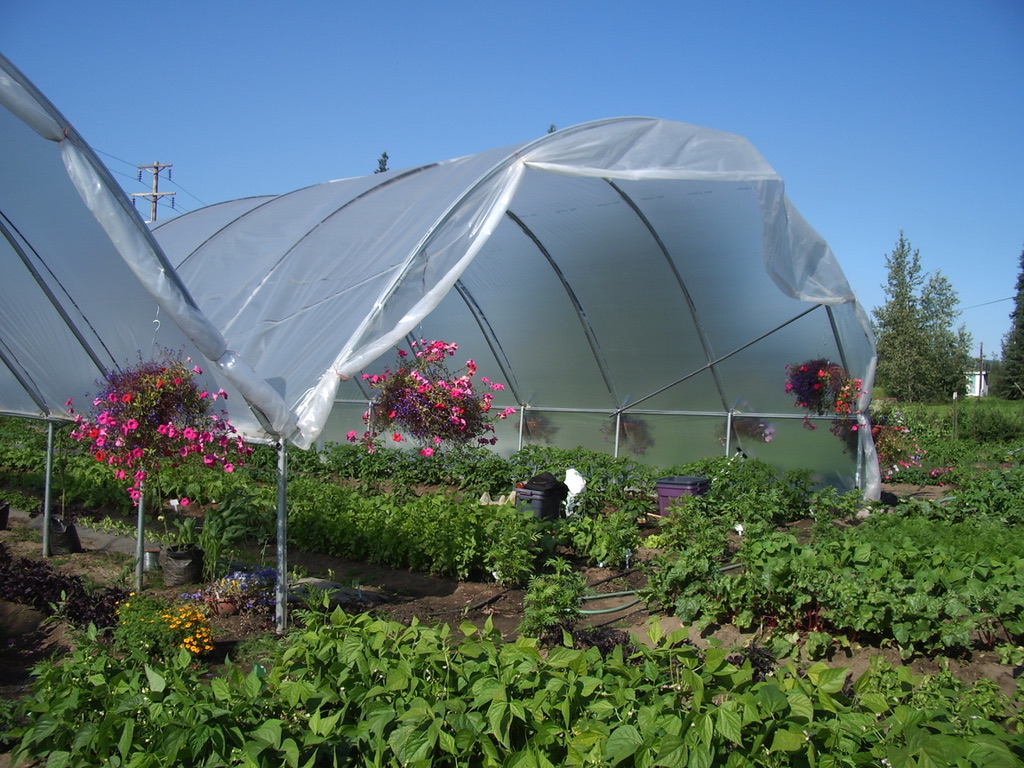
During my graduate work, I learned about the Cooperative Extension Service. I liked the practical application of science to issues that affected Alaskans’ daily lives, including, but not limited to farming and gardening. Michele Hebert was the Extension agent for the Fairbanks area at the time, and I decided I wanted to be like her when I grew up.

It occurred to me that being a farmer meant less time for travel and outdoor recreation. I also realized how challenging it can be to make a living with a small farm. Side note: I did start a very small farm in 2012 as a side gig, mostly selling peas at the Downtown Farmer’s Market.
I graduated with my master’s degree in 2006 and was hired as an assistant professor at age 25 (2007) at the University of Alaska Fairbanks Cooperative Extension, serving Tribes across Alaska, particularly in the Interior. I have since traveled to about 45 remote communities. I remain curious about the endless permutations of what people grow, how they grow it, how they cook and eat it, and why they do it and how where they live influences those things.
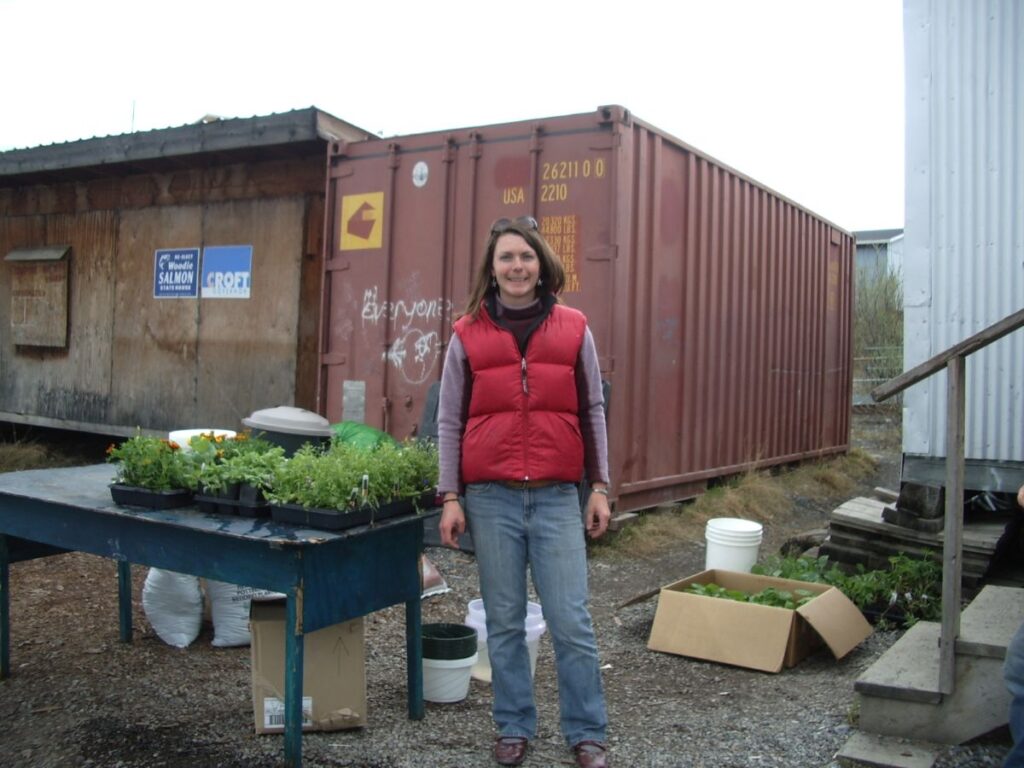
I enjoy sharing knowledge with Alaskans about food, gardening and agriculture. Although I’ve done this work for almost 20 years, I do new things every year, and am still passionate about the work I do. I learned so much from working and volunteering at various farms and gardens, beyond just how to grow things. I learned to work hard, do monotonous, sometimes miserable tasks, and see what needed to be done and do it.
It’s graduation season and perhaps you’re wondering what your next step is. Or perhaps on a break from school for the summer. Gardening and farming offer opportunities for anyone of most any age. If you don’t have a space to grow, there may be a community or school garden where you live. If you don’t know how to garden or farm, then volunteer or apply for a job at a garden or farm or sign up for workshops or training.

Nationwide, you can find internship opportunities. In Alaska, you can find out about food-related jobs and opportunities here. The Next Gen program connects those interested in working in USDA with educational opportunities and internships in agriculture-related jobs. In Fairbanks, the AFFECT program is an excellent way to learn about farming.
In Alaska, programs like 4H, FFA, and UAF Cooperative Extension Service (Nationwide links: 4H, FFA, and Cooperative Extension Service) offer educational opportunities and resources for those wanting to start a garden or farm or work in all aspects of agriculture. Agriprospects is a national workforce development network in agriculture connecting those interested in agriculture to relevant training and certificate programs offered by Extension across the U.S.
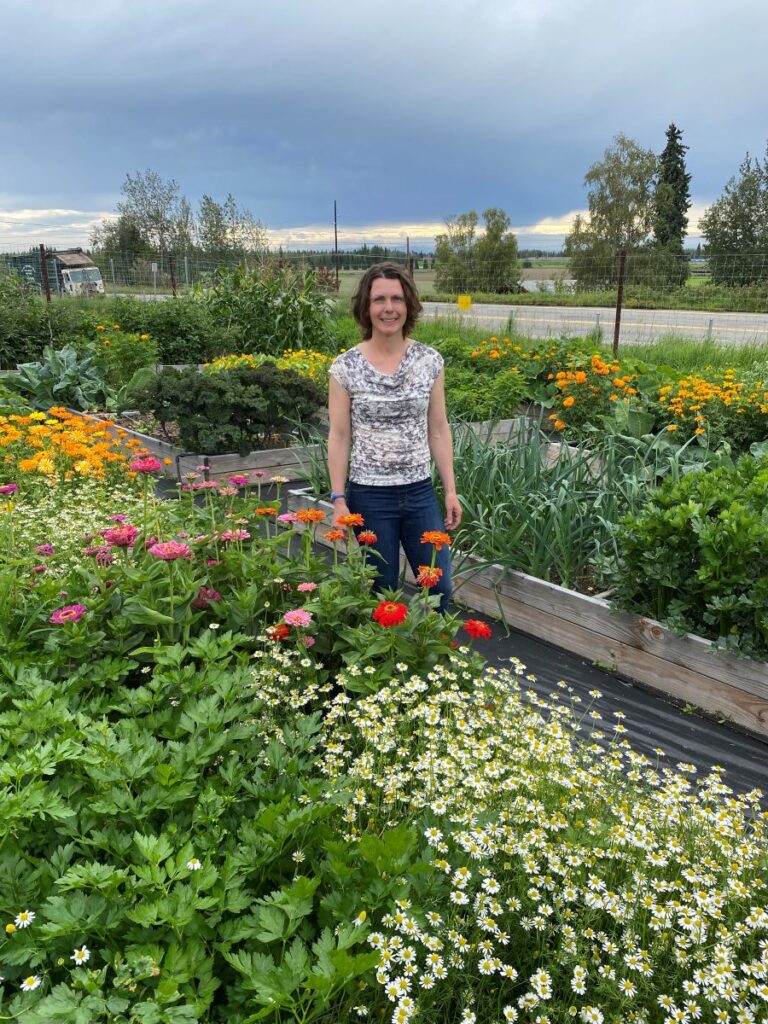

Agriculture has been an integral part of my life and career. Maybe you’ll find a passion, side gig, job, promotion, or way of life in agriculture, too.
**I want to credit my mom for an early passion for gardening and for giving me my own small garden at a young age. However, her ability to grow many large zucchini did nothing for my taste for it.**
Previously published in the Fairbanks Daily Newsminer May 15, 2026.
This work is supported by the Agriculture and Food Research Initiative (AFRI)-National Extension Clearinghouse for Industry and the Workforce, project award no. 2023-67037-40533, from the U.S. Department of Agriculture’s National Institute of Food and Agriculture. Any opinions, findings, conclusions, or recommendations expressed in this website and consultative support are those of the author(s) and do not necessarily reflect the view of the U.S. Department of Agriculture or the Extension Foundation.