Sam Knapp at Offbeet Farm Does More than Grow Food—He Stores it Most of the Winter and Writes About it

Sam Knapp could do anything. He has degrees in physics and chemistry as well as an advanced degree in plant ecology. Yet, here he is in Fairbanks, Alaska, making a living growing a wide variety of crops that he stores and sells only in the winter. Oh, and writing about it. I asked him why.

sam knapp with worker in field harvesting beets with storage facility in background
Sam Knapp harvests beets at Offbeet farm. Photo by Phil Knapp.

Post-college, Sam worked as an engineer in an office and volunteered on a farm on the weekends. He found the weekend work a lot more rewarding than the office work. Climate change mitigation and food security motivate him as well. Although reality has set in and his view of farming is less idyllic, he still finds the work satisfying, worthwhile and well aligned with his values.

Continue reading
Growing Carrots in Alaska

Carrots, especially fresh Alaska grown carrots, are unmatched in taste and texture. A favorite of kids and adults alike, they’re excellent raw, in soups or stews, roasted, or even fermented. Carrot tops can also be eaten. I like to use them to make broth, juice, and pesto.

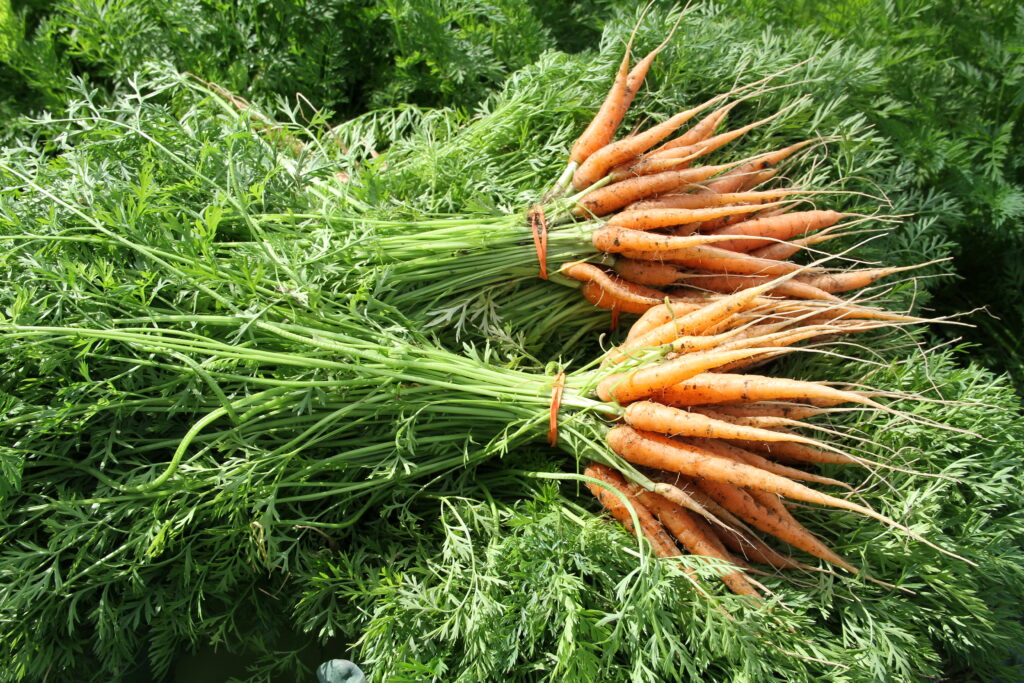
Two bunches of fresh Alaskan carrots

With proper thinning, and well-drained, loose soil, carrots thrive in Alaska. The biggest challenge with growing them is probably getting the spacing right and keeping them weeded. Carrot seeds are tiny so you almost always have to thin after they emerge. Some people like to use seed tape or a seeder and pelleted seeds to get their spacing just right—or even a paper-pot transplanter. But if you don’t plant thickly enough and you have poor germination rates, you’ll also have low yields. Germination can also take quite a few days (about two weeks, and longer in cooler soils). During this time, you have to ensure the seeds stay consistently moist. I like to cover the seeds with frost cloth to hold the moisture in and provide some extra warmth. I learned this trick from a farmer in Homer, Alaska. Unfortunately, while your carrots take their sweet time to emerge, weeds are eager to grow and soak up the water and nutrients intended for your carrots.  Continue reading