How to Build a Better Looking Garden Bed

As some of you might have deduced from reading this blog, I’m a die-hard edible gardener and it’s a stretch for me to think outside the vegetable row. If you can’t eat it and it doesn’t attract pollinators or fix nitrogen, it’s usually not going to get a spot in my garden. This summer, I decided to change that and dedicate one bed to flowers. Here’s how I designed it.

First, I needed to determine what I liked and didn’t like. As a starting point, I glanced through books and magazines, online, and through my many photos of flower beds taken at the Georgeson Botanical Garden on the Troth Yeddha’ campus, and at local hotels, greenhouses and home landscapes. I’m a garden nerd, and so I take a lot of photos of flowers, vegetables and gardens.

One of my favorite beds on campus uses the massing approach, where only one type of flower or plant in one or two shades is grown. This bed is a mass of crimson and strawberry-colored Nicotiana. It creates a dramatic visual impact. I’m not so into the beds on campus that are white and baby pink alyssum, a so-called restful combination.
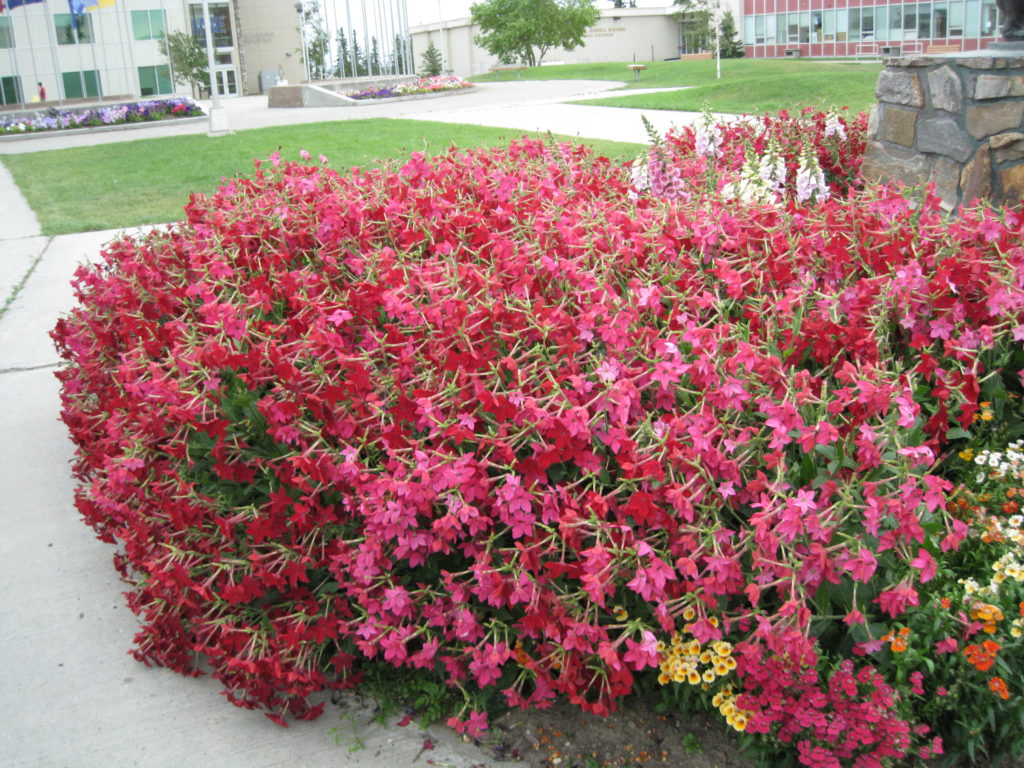
pink and red Nicotiana fill the screen

These Nicotiana have taken over this garden bed and are a good example of a massing technique.

In addition to the overall bed design, I needed to think about color, texture, flower shape, height, focal points, bloom sequence and whether to integrate flowers, shrubs, herbs, vegetables and grasses. And finally, would the plants I chose thrive in Fairbanks?

From looking at other flower beds, I figured out that for colors, I like the maximum amount of contrast. Give me a bright pink cosmos with dark blue iris (or blue sage) or bright orange marigolds with dark blue lobelia. In There’s a Moose in My Garden,  Brenda Adams calls this a “sassy’ combination. On the color wheel, this translates to a complementary or split complementary color scheme. I’m not so drawn to monochromatic, washed-out colors. This handy color wheel calculator helped further identify color schemes I liked. Cornell University also has some helpful guides for using color to design flower beds and more.
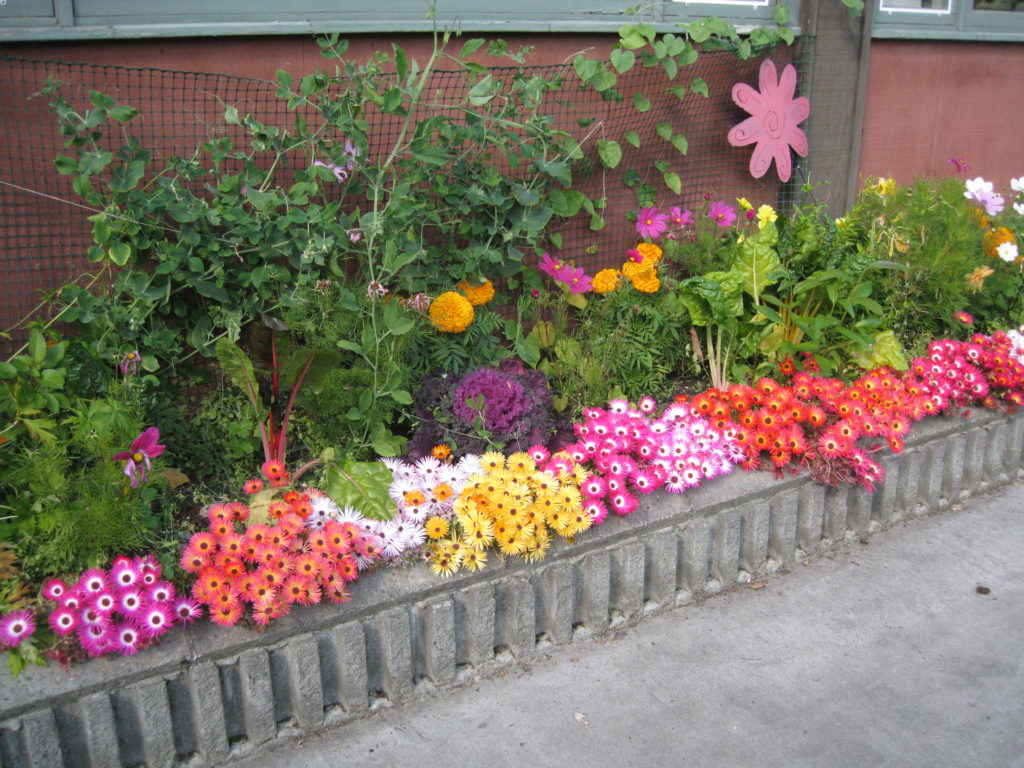
A very colorful garden bed that integrates flowers and vegetables like kale, swiss chard and peas.

A very colorful garden bed that integrates flowers and vegetables is a beautiful and practical way to grow food and ornamentals in limited space. In front are Livingston daisies, Harlequin mix.

I also like varied and dramatic textures like grass or globe onions or coleus combined with flowers. And I like unique, oddly shaped flowers like hibiscus, Chinese asters, double poppies and clematis, not only because they photograph well. I’ll blame it on being a lifetime Fairbanksan, but I’m a little bored with petunias, lobelia, geraniums, begonias and pansies, even though I know they’re dependable.
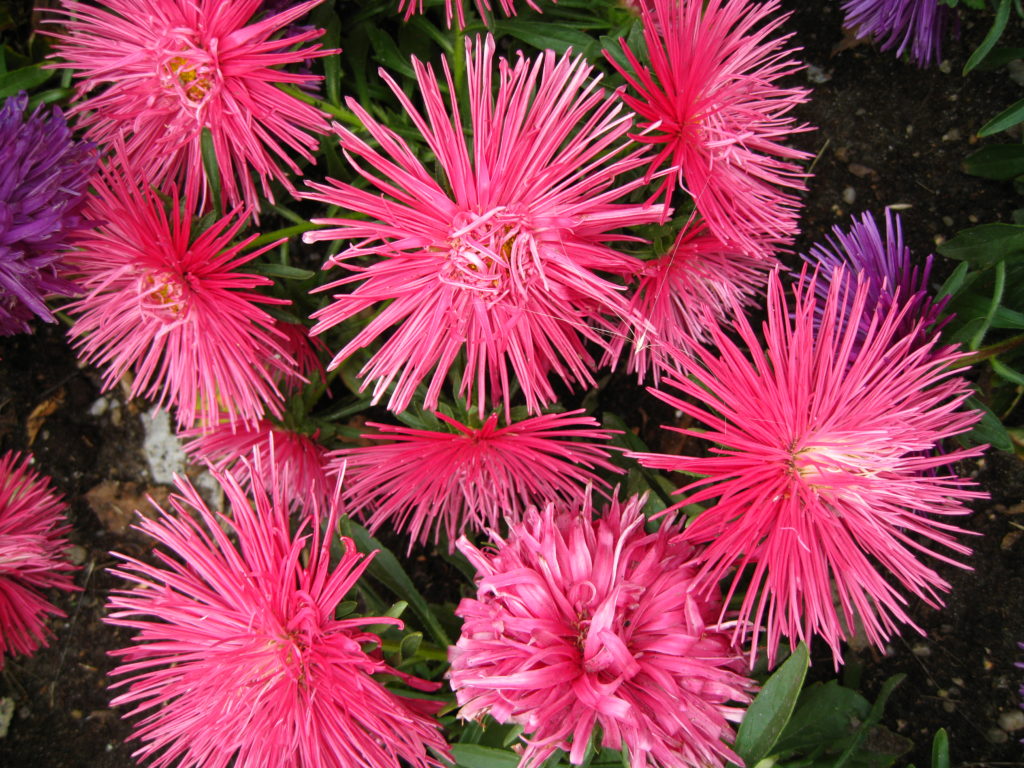
several pink chinese asters fill the screen

These Chinese asters offer an interesting texture and vibrant color.
Continue reading

Before you Toss Your Fish Carcasses Back Into the River, Consider Making Bone Broth or Composting Them

For many Alaskans, it’s time for fishing! But before you toss your fish carcasses back into the river, consider two options to eke out every last bit of goodness from them. One is to make soup and one is to compost them. Better yet, do both and make broth or soup first, then compost the carcasses or make some soup and some compost. Fish broth is nutritious and tasty for you, and fish compost is nutritious and tasty for your plants.

This recipe incorporates salmon heads, and I would not hesitate to add the tails and bones, too. I would also recommend Brazilian fish stew.

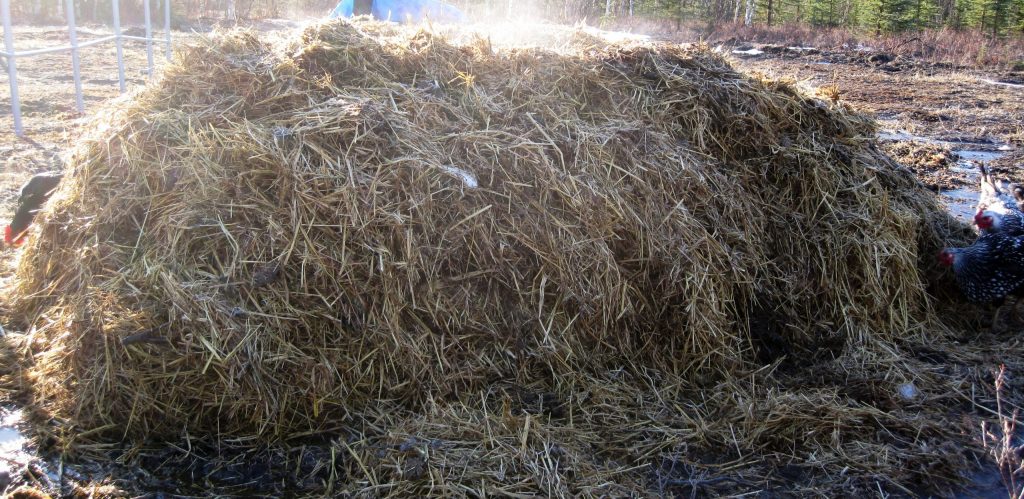
A large compost pile is heating up to 160 degreed Fand steam is riding off of it.

You want to make sure your pile does not heat up over 160 degrees F. You can see the steam coming off this pile. You can monitor your pile with a long-stemmed thermometer.

Methods and materials for composting fish abound. Traditionally, fish was just buried in the garden with decent results. In Alaska, you do risk attracting dogs, bears, flies and other pests to your garden if you practice this method. Steve Kahn wrote in the Anchorage Daily News that one year in the fall, even though there were plenty of other fish washed up on the shore of Lake Clark, bears churned up his garden to get at the ones he and his wife had buried.

If you plan to compost the carcasses, you’ll want to make sure that you have a large bin or pile and that it is fenced in – perhaps with an electric fence if bears or dogs are problematic where you live. You can also try sprinkling hot pepper or paprika around the bin.

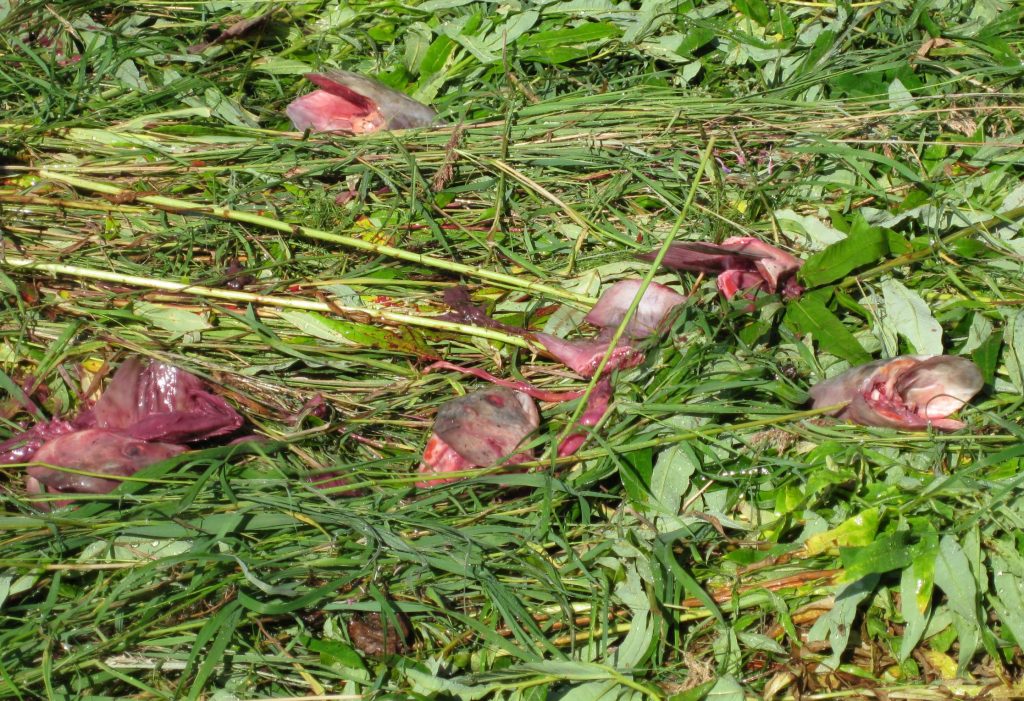
Fish heads are being layered in with fireweed in this compost pile.

Fish heads are being layered in with fireweed in this pile.

Much of these same principles apply to composting in general as with any composting, but there are some additional considerations. Fish composting has the potential to turn into a positively rank operation so you need to have a large enough bin or pile to manage those odors. In general, for a compost pile to heat up, it needs to be at least a cubic yard in size. But when composting fish, bigger is better. Continue reading

Need Seeds? Have Extra Seeds? Then Swap and Share.

Just like toilet paper, seeds have been a favorite purchase of panic buyers. Several seed companies have temporarily stopped orders, are seeing long delays in shipping times and have sold out of many varieties. Unless you really had your ducks in a row early this spring, you might still be waiting for seeds that you’d hoped to start inside or plant outside, or are simply unable to order from your normal company.

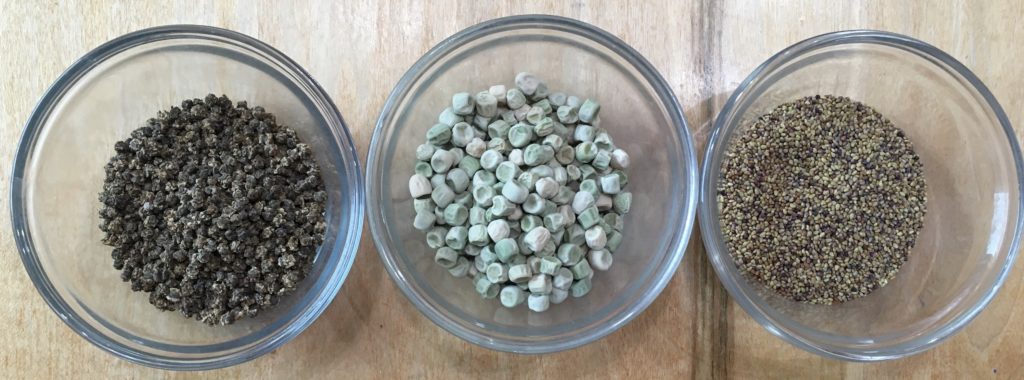
Three bowls lined up with beet, pea, and clover seeds.

If holding a traditional seed swap, participants can spoon in bulk seeds into their own bags. In COVID-19 times, prepackaged seeds are probably best.

If you think you might have ordered much more than you can use in the next couple of years (perhaps based on a plan you made previously) but don’t have enough of some other types of seed, consider swapping or donating them. Continue reading

Are Small Farms Viable in Alaska?

Just like with scaling up and planning your garden, starting a small farm provides not only some food security for you and your family, but also for your neighbors and community members. It might add a few jobs and infuse money into the local economy.  Climate change is increasing the length of the growing season and warming temperatures make it possible to grow a wider range of crops in Alaska.

A colorful and well designed farmer's market display table.

Attractive displays go a long way to selling your crop.

While I’ll be the first to point out that as a small farmer it’s very hard to turn a profit, let alone make a livelihood, I know food makes a big portion of my family’s budget so growing food, whether in a garden or farm makes more and more sense. Food prices increased nationwide by 7.9 percent from February 2021 to February 2022.

This thesis, Assessing Food Security in Fairbanks, Alaska is dated, but still provides insight into the demand for and challenges of farming in Interior Alaska. And, this market analysis also provides important information for Interior Alaska on the demand for local produce. Continue reading

Peony Farming—More Work and a Smaller Reward Than Many Imagined

In the last decade, peony farms in Alaska have increased tenfold. According to the latest Census of Agriculture, there were 100 peony farms in the state.

The growth has been propelled by headlines like these: Alaska’s peonies are the state’s new cash crop, ‘The industry’s about to explode’: Peony market flourishes in Alaska, Alaskan peony farmers aim to grow industry, and How Alaska became a center of peony cultivation.

Credit for the boom also goes to UAF Professor Pat Holloway who, 20 years ago, made it known that, because Alaska peonies bloomed at a time when they weren’t available anywhere else in the world–during the height of the wedding season–they could garner premium prices.

Notwithstanding the ebullient headlines, are Alaska’s peony farmers flourishing? Are they making money? That’s what I wanted to find out when I interviewed over a dozen farmers in Interior Alaska.

David Russelll is the president of the Alaska Peony Growers Association (no longer active), and owner of one the largest peony farms in Alaska. He likens peony farming to a video game. The first level is growing marketable peonies, the second, chilling and post-harvest handling, and the third, marketing. Each level presents new challenges and unknowns. If you successfully reach the third level, you must continue juggling all of the challenges of the first and second levels as well. Continue reading

The Benefits of Minimizing Food Waste Abound

If you care about the environment and mitigating climate change, reducing your food waste could help put a dent in 8% of greenhouse gas emissions that are from producing food that is lost or wasted, according to the World Resources Institute.

If you care about your pocketbook, cutting your food waste could save you up to $1,500 per year, the average cost of the food that American households throw out every year. According to a recent report from the institute, Reducing Food Loss and Waste, North America and Oceania (Australia and Pacific Islands) waste more food at home or in restaurants than any other region in the world.

More research and studies are needed to better quantify food loss and how to address it, but it’s an important issue that warrants our attention and action. Here are some strategies you can use to reduce your own food waste.

I’ve noted this before, but growing a garden is a worthwhile way to combat food waste. It saves you trips to the grocery store, and because you can harvest when you’re ready to eat it, it gives you quite a bit more flexibility than when you go to the grocery store and have to plan for an entire week. This, of course, is only a useful tool for part of the year in Alaska, but that part is getting longer and longer as our season grows. Continue reading

Good Garden Reads—What’s on my Bookshelf

If you find yourself with any extra time these days, you know, because there’s a pandemic, check out one of these inspiring garden reads. Here’s what’s on my book shelf.

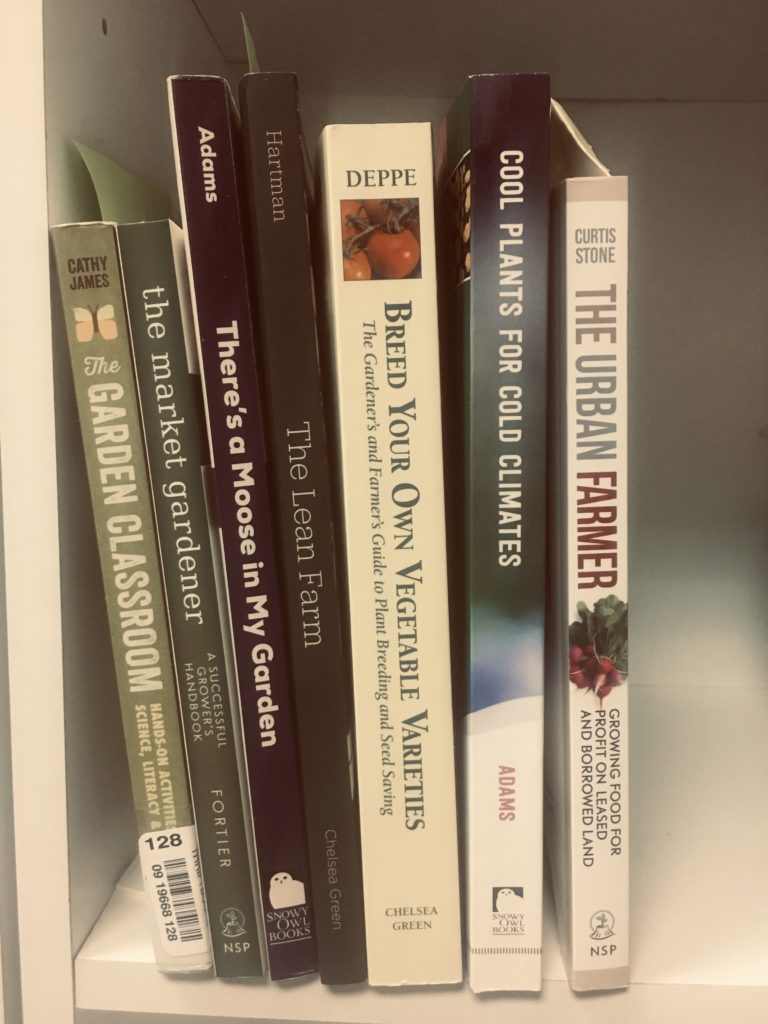
Books reccomended in this article on a bookshelf.

Recommended garden reads

The Garden Classroom by Cathy James is an excellent resource for teachers, parents, or those involved with children. It’s intended for kids aged 4 to 8 and has all sorts of fun, creative ideas for integrating learning with the garden whatever subject is the focus (math, science, reading, and art).

Brenda Adams, is an award-winning landscape designer in Southeast, Alaska and has written two books: There’s a Moose in My Garden and Cool Plants for Cold Climates. Although you’ll need to filter her plant recommendations through the lens of an Interior gardener, the books are inspiring, beautiful, and backed by a very experienced Alaskan landscaper. They will help you whether you’re designing a new flower bed or an entire landscape.

Not only will Breed Your Own Vegetable Varieties  by Carol Deppe spark your interest in saving seeds, it might also inspire you to develop a new vegetable variety. Deppe explains it’s easier and more fun to develop new varieties to suit your own desires and location. We live in a unique climate and have a relatively small population so it’s worth trying! If you’re inspired, then check out the Ester Seed Library and ‘borrow’ some seeds that other local gardeners have been adapting for Interior Alaska. The seeds are free, but you’ll be expected to save and replenish the seeds. While you’re there, look for books on this reading list at the John Trigg Ester Library or other books on sustainability and agriculture. Continue reading

The Biggest and Sweetest is NOT Always the Best When it Comes to Fruits and Vegetables

When compared with many foods, fruits and vegetables are unequivocally healthy. But look more closely and you’ll find a wide variation in how nutritious they are. This variation is given short shrift by most health campaigns, which focus on nudging people toward eating fruits and vegetables and less junk food, period. Unfortunately, the devil is in the details. I think most of us, including my 4-year-old, are adept at distinguishing between unhealthful junk food and the merits of fruits and vegetables. But we don’t give much thought to which types of fruits and vegetables (and which varieties) are most nutritious.

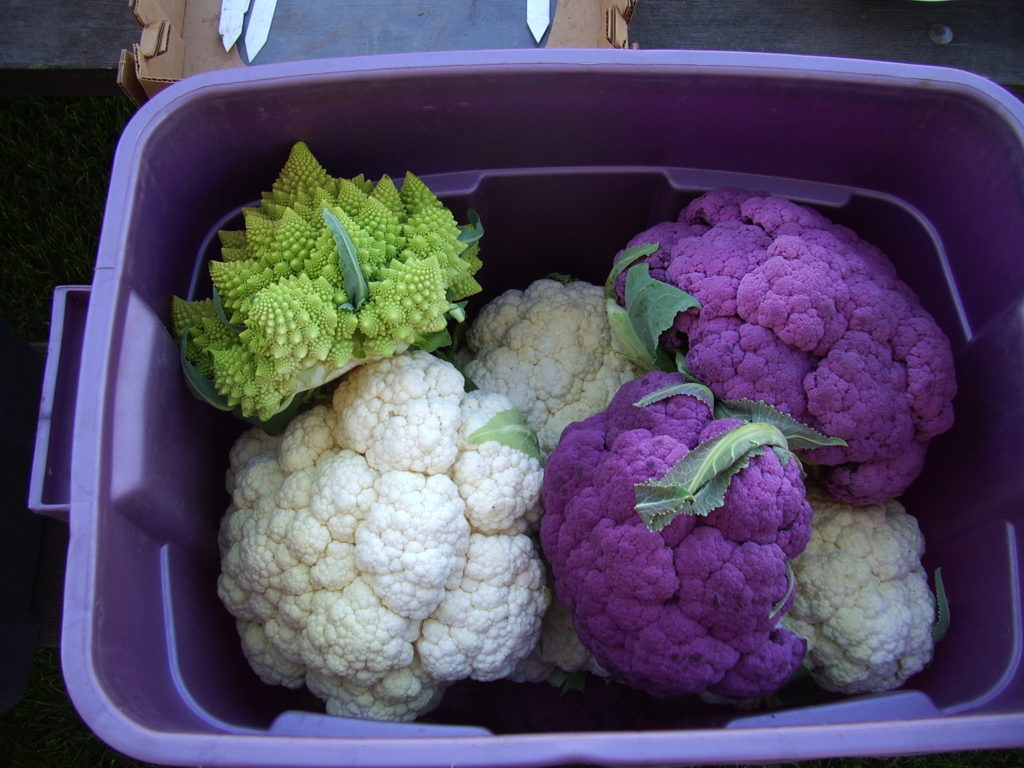
Tote of multiple varieties of cauliflower.

If you’re like me, you think just because something is a fruit or vegetable then you can eat as much of it as you want to. For instance, mandarins and super sweet corn, albeit a fruit and a vegetable, veer toward junk food in terms of sugar content. One medium mandarin has 9 grams of sugar, on par with one standard Reese’s cup, which contains 10 grams of sugar. One large white ear of corn contains just about as many carbohydrates (25 grams) as half of a bagel (27 grams). Granted, they do contain more fiber and nutrients than junk food.

Simple slogans from the U.S. Department of Agriculture encourage us to fill half of our plate with fruit and vegetables each meal (a little more vegetables than fruit). This gives us the idea that as long as we eat a certain amount of any fruit or vegetable at each meal, then we have our bases covered and will be healthy. Continue reading

The Princess Garden—Beautiful, Productive and Sustainable

One day when I was biking around town photographing flowers and gardens (yes, I love my job!), I was surprised and delighted to discover a gem of a garden, farm even, behind the Fairbanks Princess Riverside Lodge. Both the size and appearance of the garden impressed me. I’ve seen tiny hotel or restaurant gardens with oversized claims of sustainability and farm-to-table practices. But the Princess garden is different.

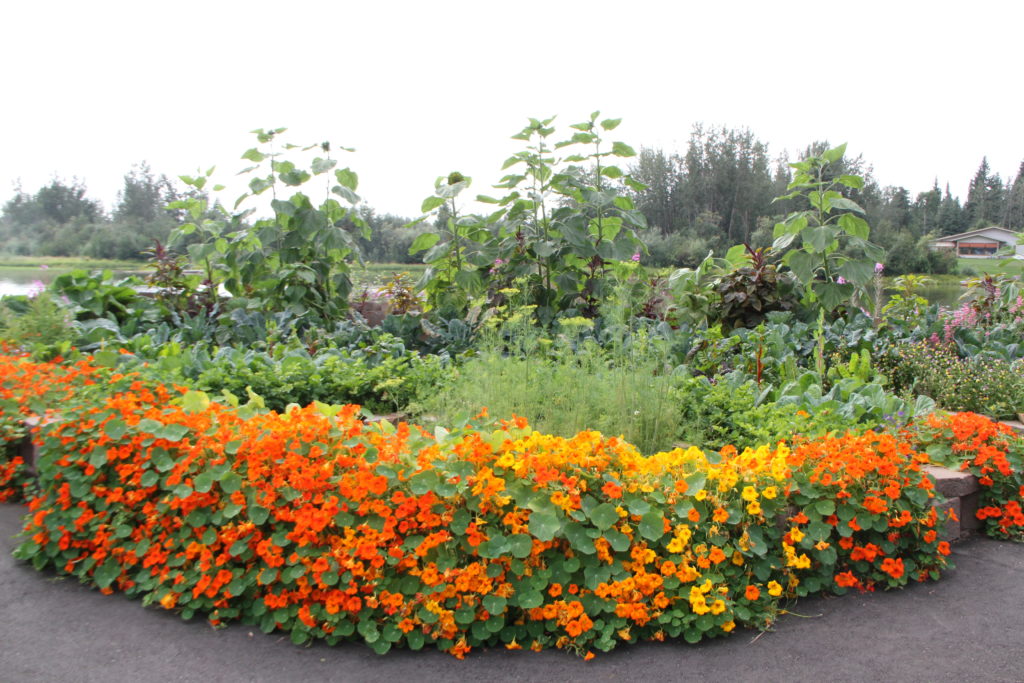
Vibrant display of nasturtium flowers at the Fairbanks Princess Lodge garden.

Vibrant display of nasturtium flowers at the Fairbanks Princess Lodge garden.

Not surprisingly, I found Gretchen Kerndt busily tending the garden. Gretchen has operated Basically Basil for more than 20 years in Fairbanks, with an emphasis on herbs and, well, basil. I interviewed Gretchen and Mark Winans, the food and beverage manager at the hotel, to learn more about why and how they created the so-called Chef’s Garden.

The hotel has always purchased locally grown food from local farmers, including Gretchen, but in the past few years, it’s gotten harder to fill their orders.

Mark explained, “We had the space out there. It was a no-brainer. We had the perfect opportunity. The tourists love it.” Continue reading

All About Alliums—Knowing Your Onions, Shallots, Garlic and Leeks

Alliums are the vegetables we can’t do without–onions, garlic, chives, leeks, and shallots. They are so called because they belong to the genus Allium. We add them to pizza and pasta, soups and stir-fries, and Thai and Indian cuisine. So why not make some space for alliums in your garden this year?

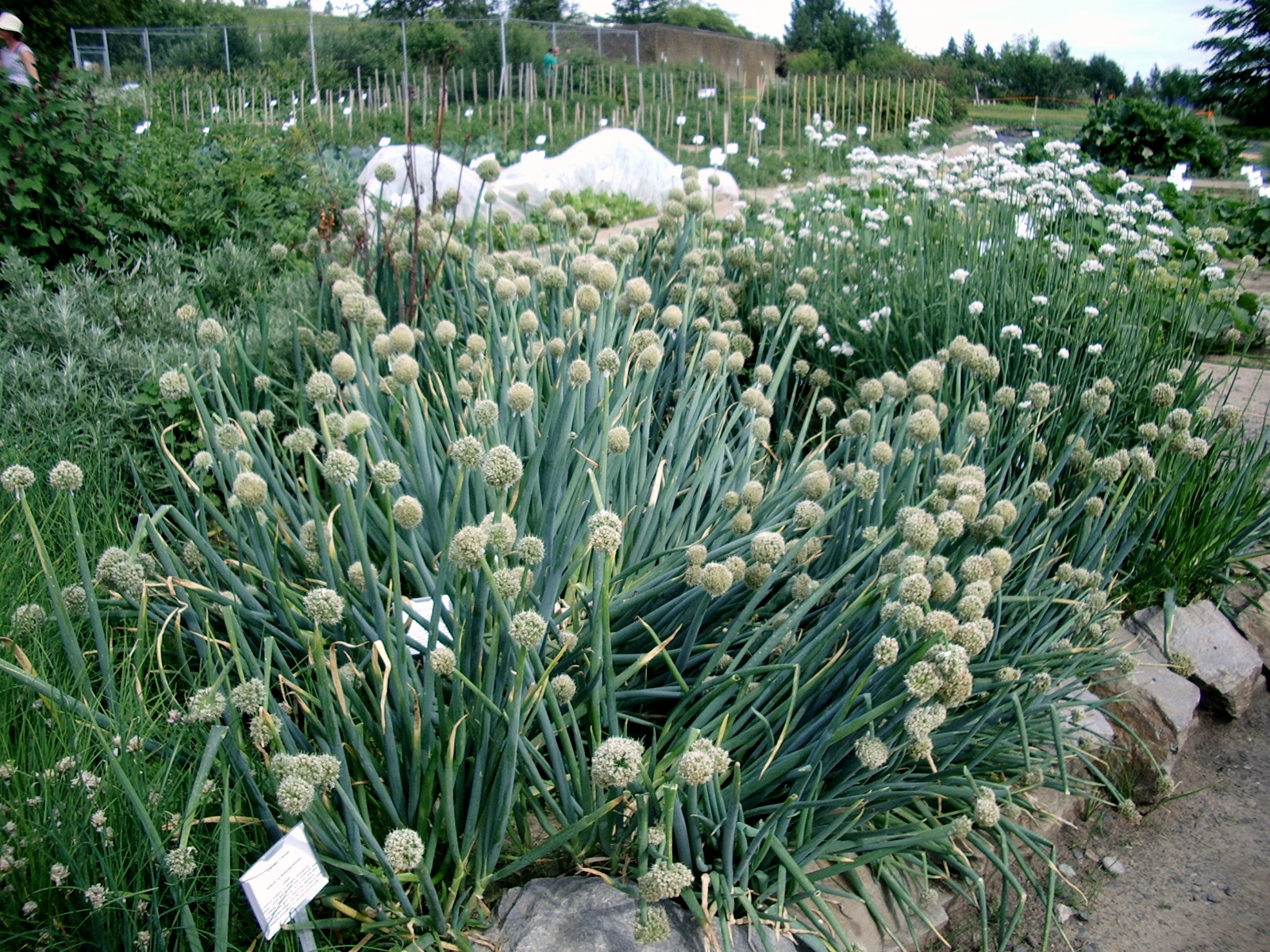
Siberian Onions growing in the Georgeson Botanical Garden in Fairbanks, Alaska.

Siberian Onions growing in the Georgeson Botanical Garden in Fairbanks, Alaska.

They are easy to grow but you must first know how to start them. There are several ways.

You can plant onions, shallots, leeks, chives, and Siberian onions from seed. Garlic, on the other hand, does not produce fertile seed so you must plant garlic cloves. Seeds should be started inside about 10 weeks before transplanting outdoors.

But seeds aren’t your only option. I don’t have the patience for starting alliums from seed so I buy sets or dormant plant bundles which can be planted directly outside and show visible, daily growth. Sets are dried, half-grown or baby onions. If growing onions, shallots, or leeks, you can grow them from semi-dried or dormant plants that come in bundles of about 50 or 60 plants. If kept cool and dry, you have up to one week before they need to be planted. You can also buy live transplants, but this is likely more expensive than sets or dormant plants. Continue reading